How to set up the H5P student declaration on AI usage activity
As a Subject Coordinator, if you are permitting the use of AI in assessments, you can use the following declaration added to the LMS Instructions area to stipulate the permitted use and allow students to fill in bespoke declarations of their use of AI in undertaking the assessment activity.
Embedding the H5P student declaration into a Canvas Assignment
- In a Canvas assignment, add your instructions and modify settings as required.
- Ensure your cursor is on a new line under your instructions, as this is where the H5P student declaration will be embedded.

- On the rich content editor (RCE) toolbar, click the Apps icon, then select View all.
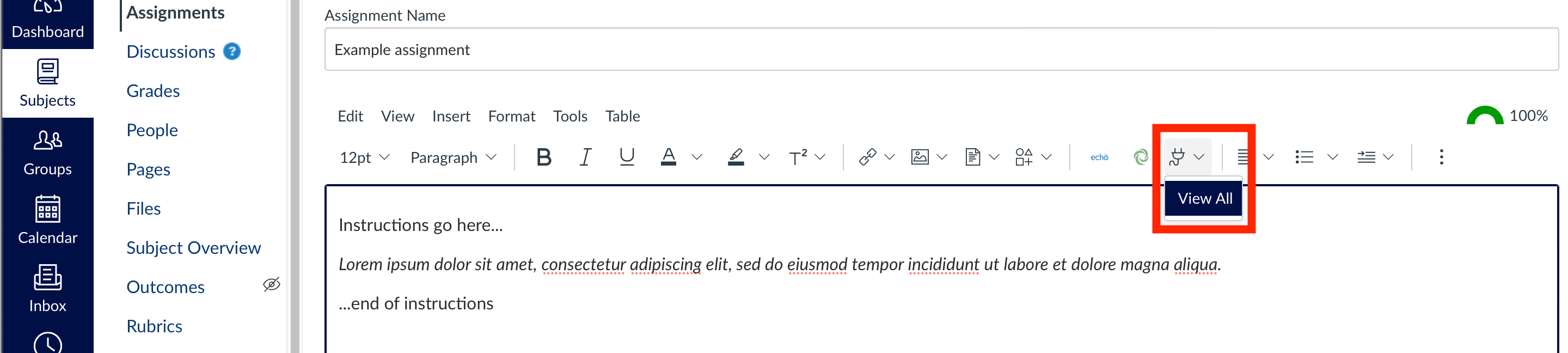
- The All Apps window will open.
- In the All Apps window, select Interactive Content - H5P.

- The Interactive Content - H5P window will open.

- From the Manage Content dropdown, select All Content.

- Under All Content, search for AI-generated material declaration.

- To clone the student declaration H5P:
- Click the 3 dot/More options menu.
- Select Clone.

- A clone of the AI-generated material declaration H5P question will open in the H5P window for review and editing.
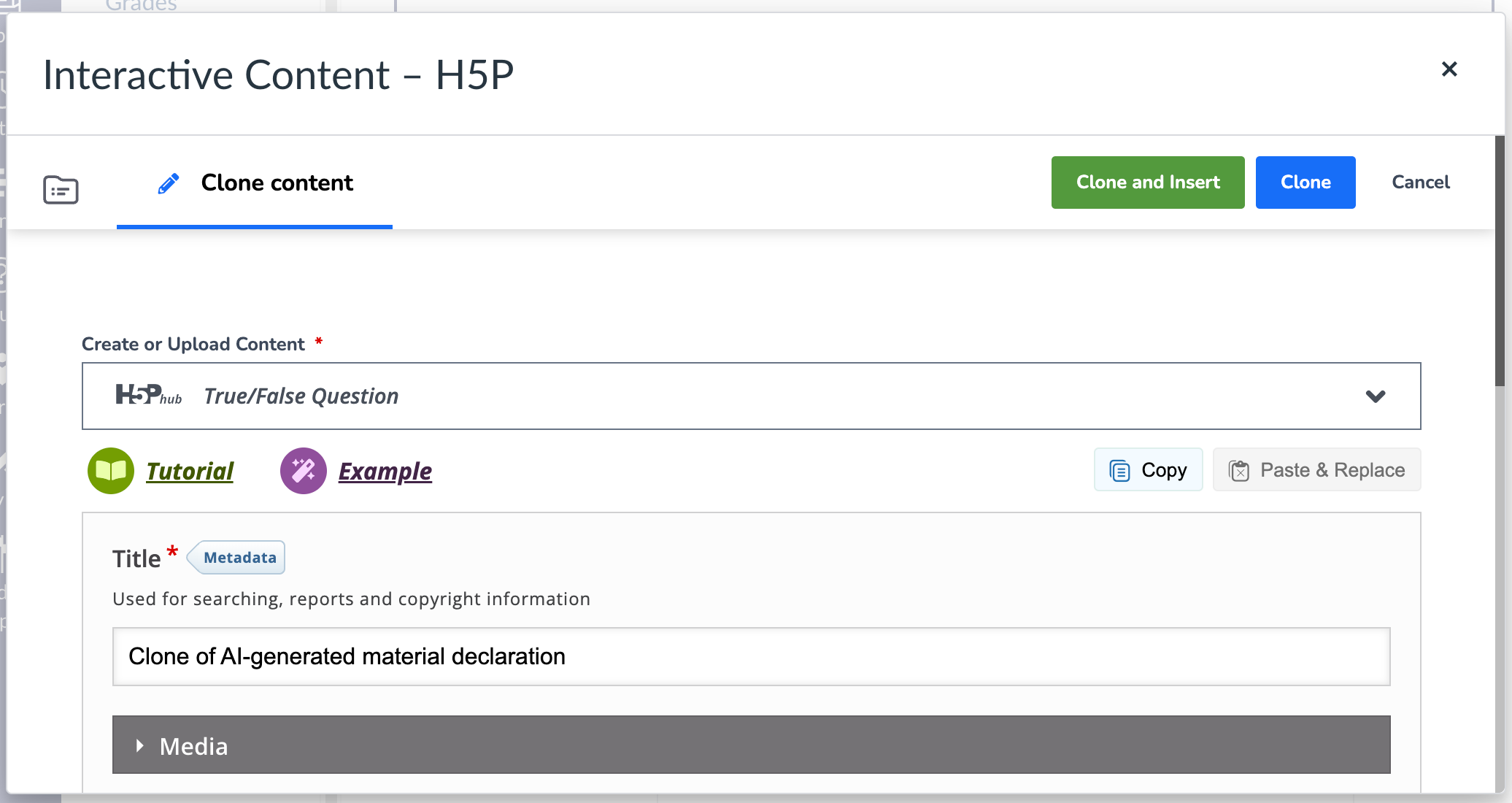
- Update the title in the H5P activity and review the settings in the H5P window. The recommended naming convention is:
- [subject]-[Assignment name]-AI-generated material declaration
If multiple declarations are needed for your subject, you will need to clone the H5P student consent declaration for each assignment.

- Once the H5P settings are finalised click the Clone and Insert button.
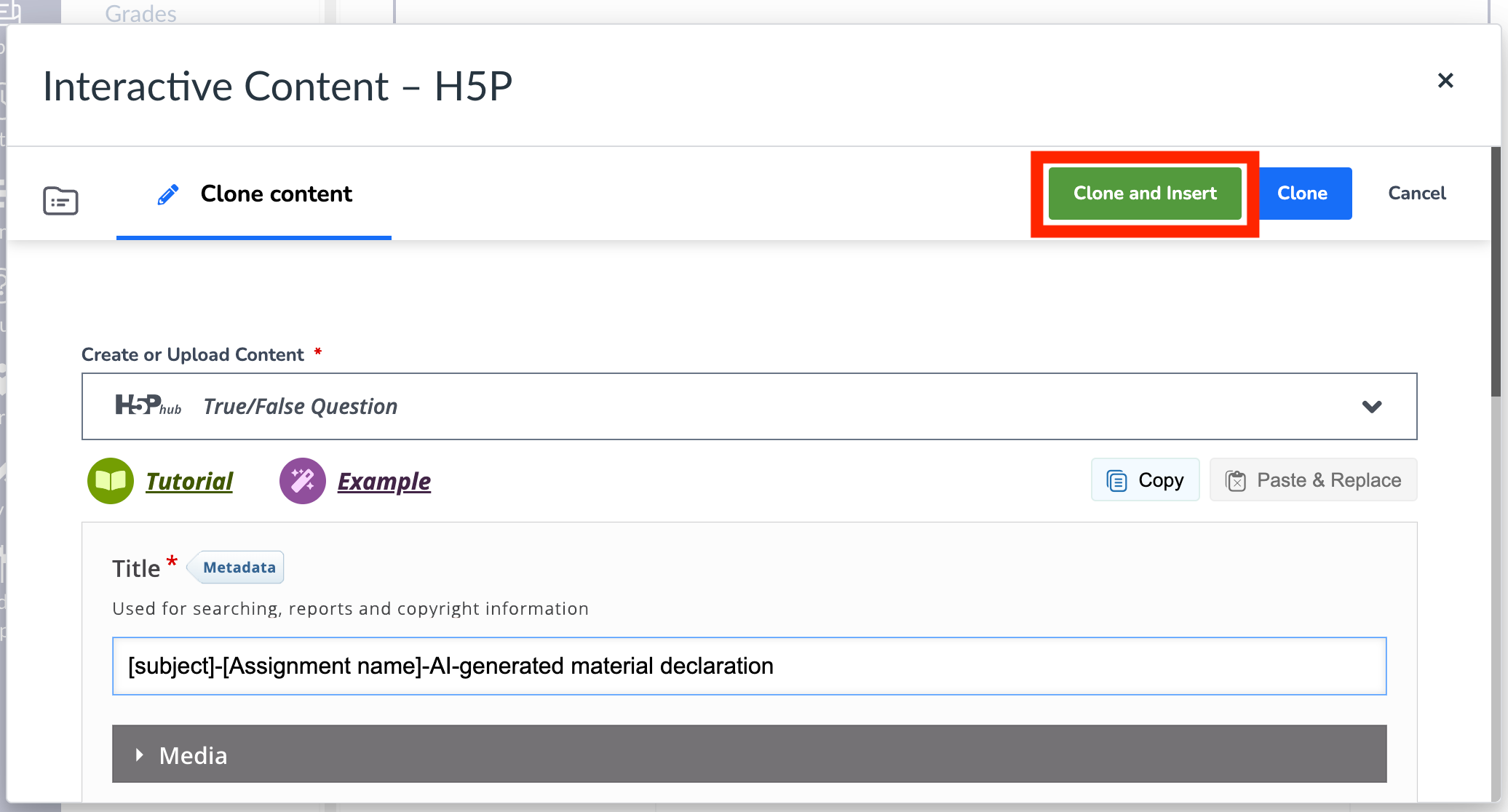
- The instructions in the assignment settings will be updated with the embedded H5P activity. To finalise the changes in the assignment, click Save.
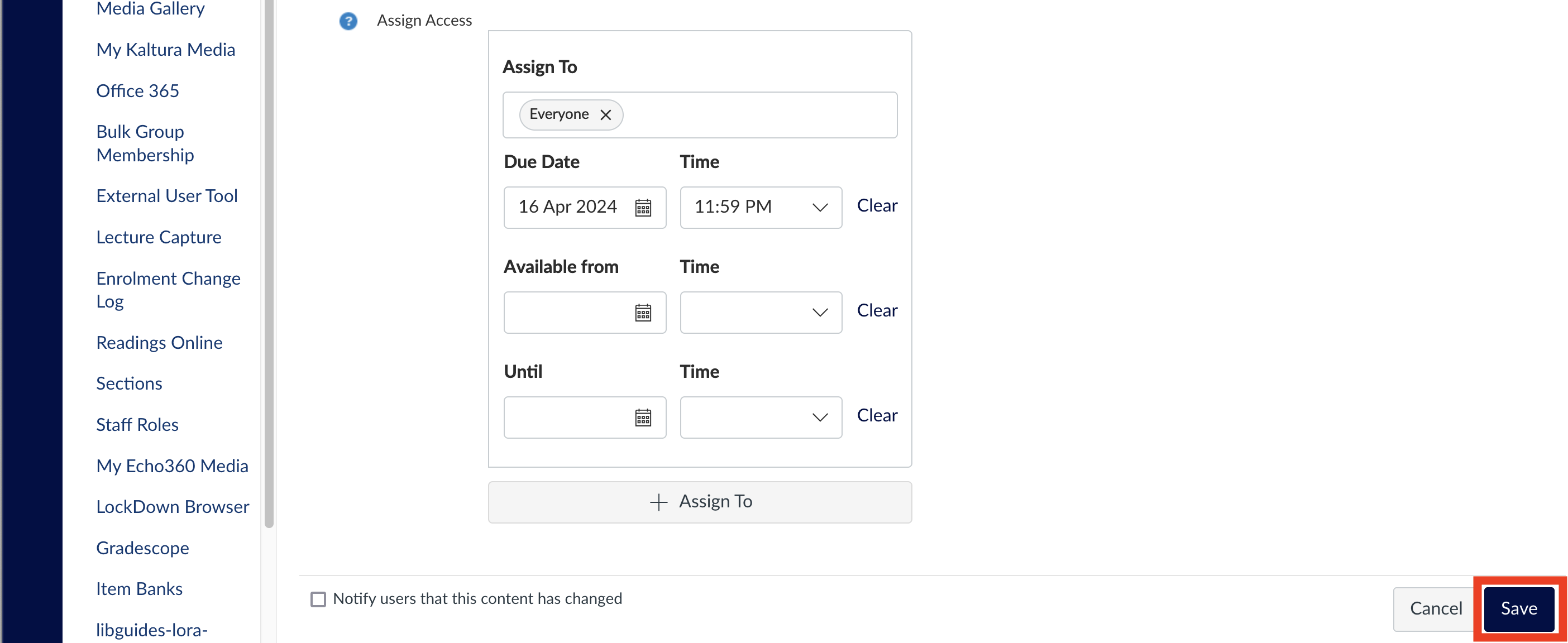
The H5P student declaration will be embedded in the Canvas assignment instructions.
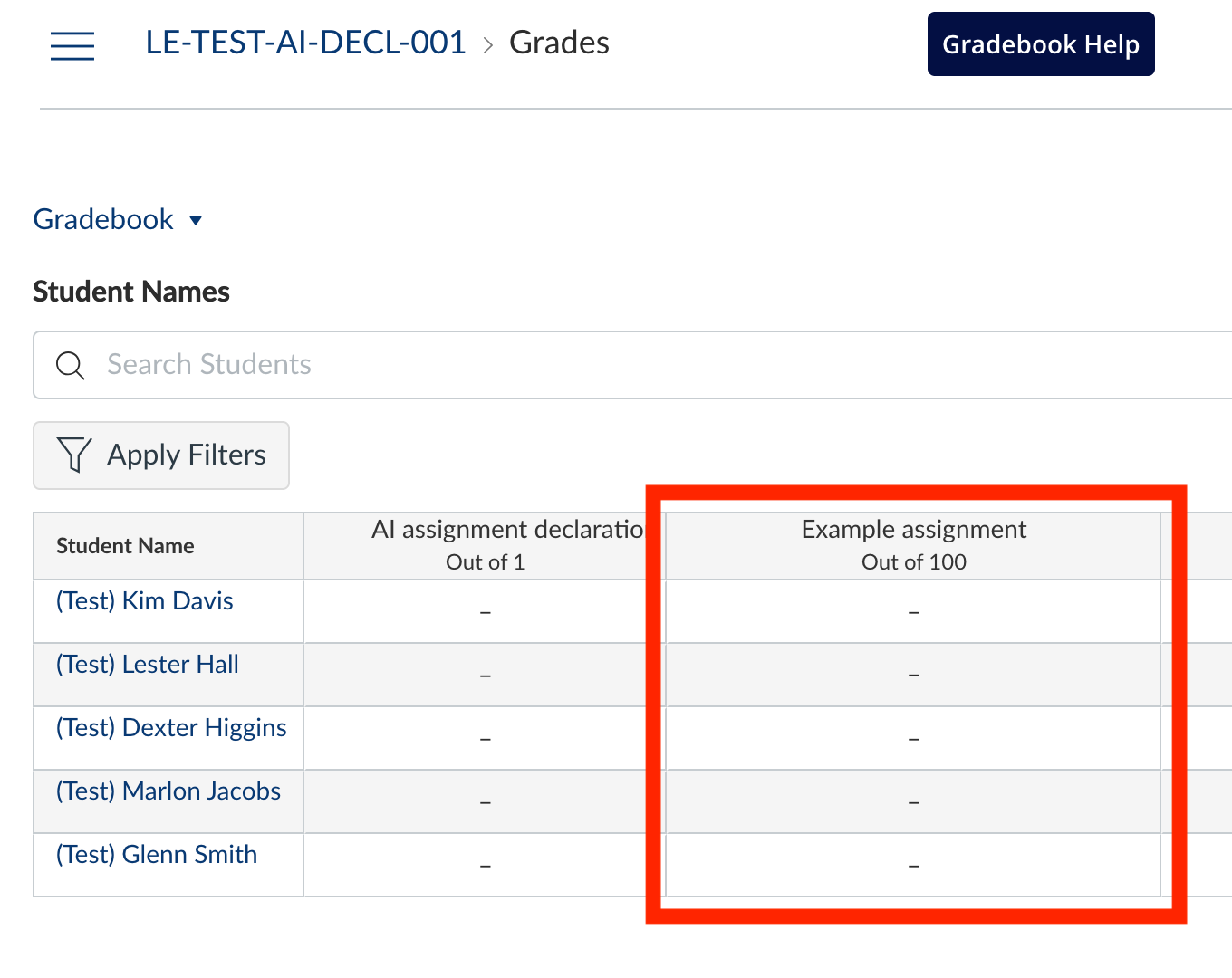
There is no separate column for the student declaration results in Gradebook, declaration results are viewed via H5P Reports. To view declaration results refer to the steps below under Reports.
Reports
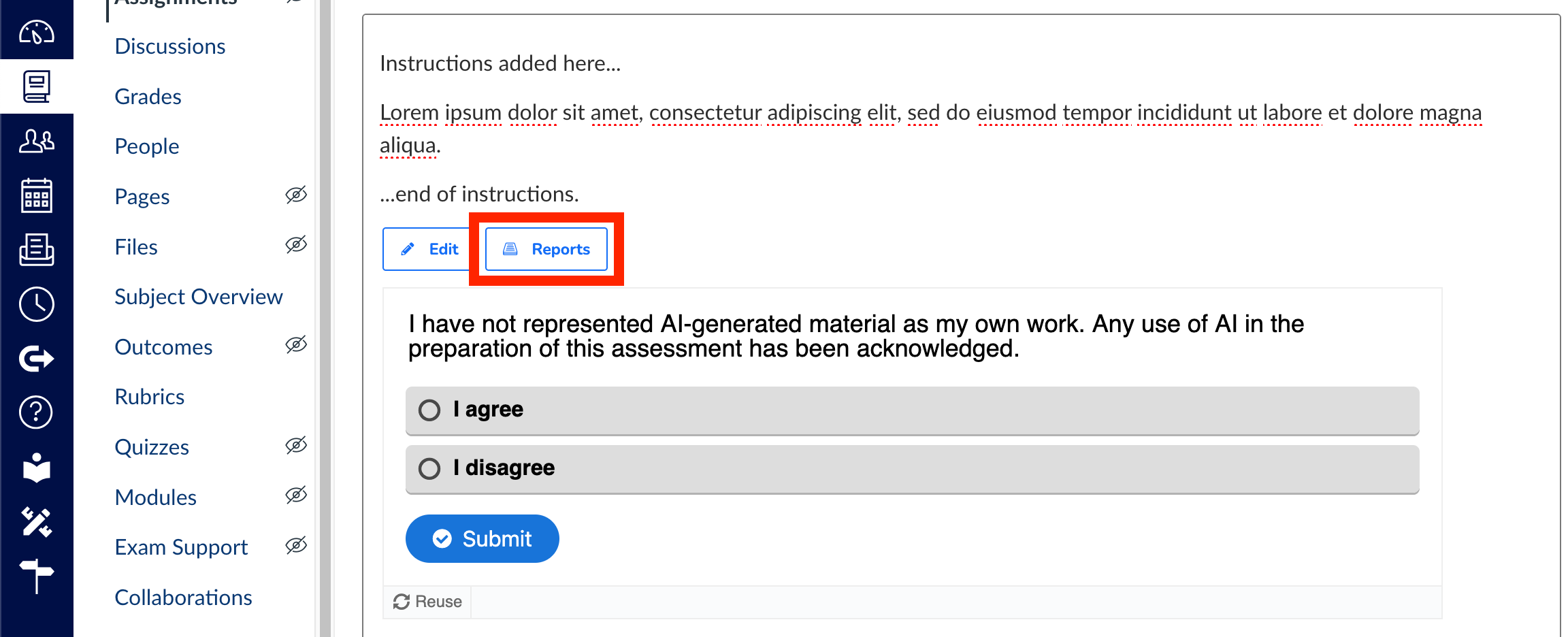
Users with the Canvas ‘Instructor’ role in a subject can track student declarations by navigating to the relevant H5P declaration activity and clicking the Reports button.
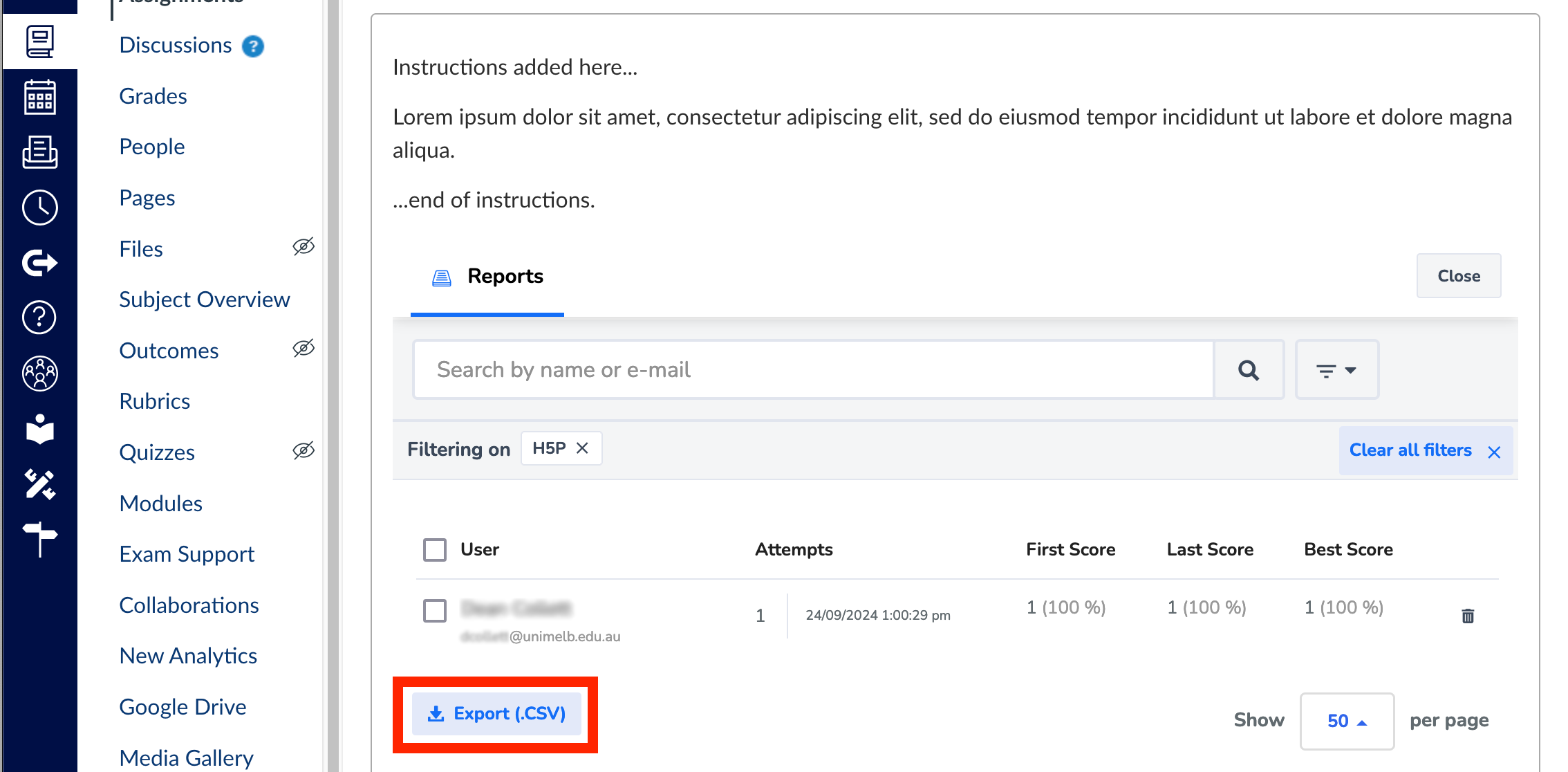
The report can also be exported to CSV.
Troubleshooting
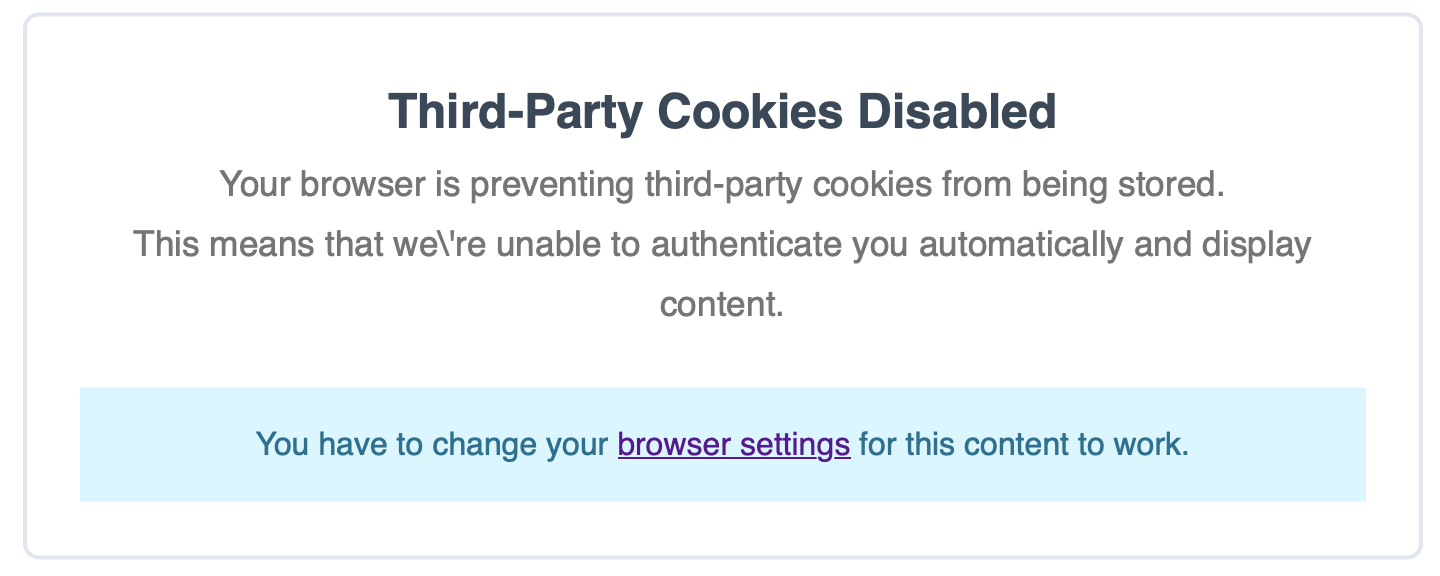
Third party cookies disabled
If a third-party cookies notice appears, users will need to adjust their browser settings for the embedded content to appear in the Canvas assignment.
This guide was last updated 18 Mar 2026.
Submit an LMS support request for further assistance or to report any errors or omissions in this guide.